
Brief Context
In News Conservation scientists warn that invasive alien species are destroying local biodiversity and habitats in India. Invasive alien species Definition: They are non-native organisms introduced accidentally or intentionally (e.g., ornamental fish, decorative plants, or for land restoration). They often lack natural predators in the new environment, allowing them to multiply unchecked.
Source Content
Syllabus: GS3/Environment
In News
- Conservation scientists warn that invasive alien species are destroying local biodiversity and habitats in India.
Invasive alien species
- Definition: They are non-native organisms introduced accidentally or intentionally (e.g., ornamental fish, decorative plants, or for land restoration).
- They often lack natural predators in the new environment, allowing them to multiply unchecked.
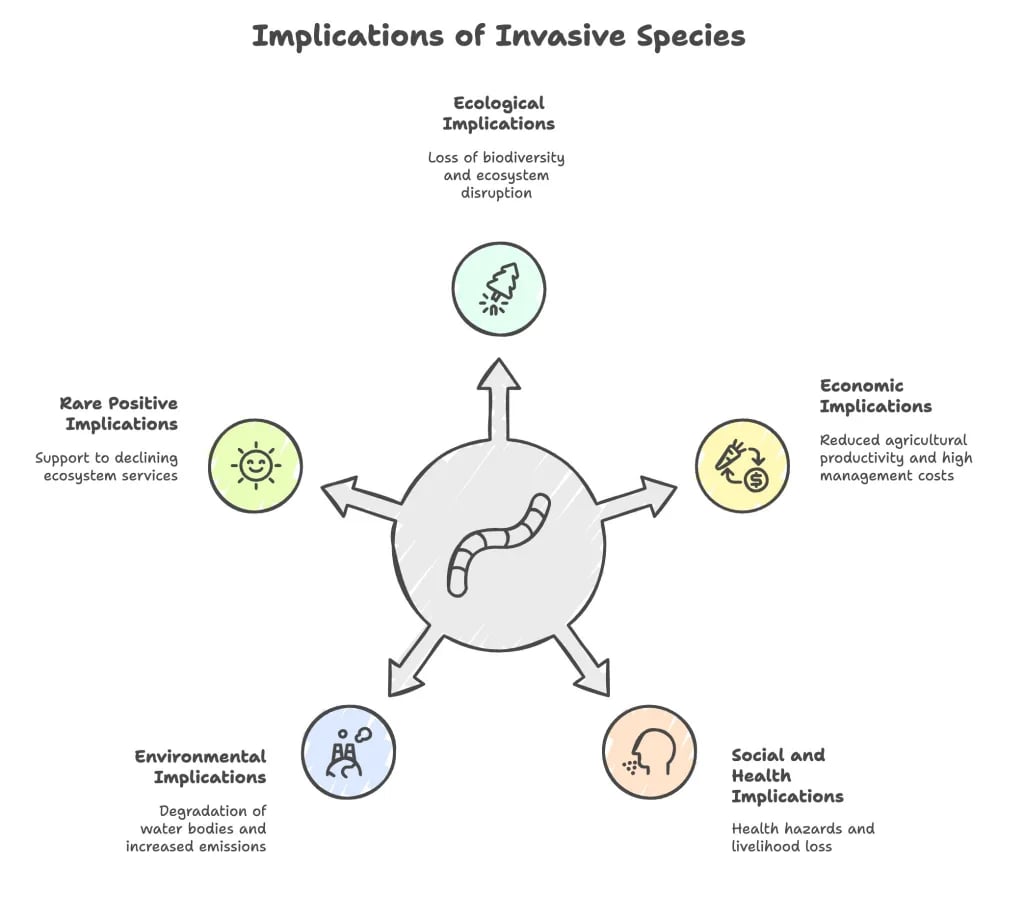
- They often spread rapidly, outcompeting native species, harming biodiversity, causing local or global extinctions, and damaging habitats.
Common Examples in India
- Lantana camara: Invades forests, outcompetes native plants, and hinders regeneration.
- Parthenium hysterophorus (Congress grass): Spreads over farmland and causes allergic reactions.
- Eichhornia crassipes (Water hyacinth): Chokes lakes and rivers, depleting oxygen and affecting fisheries.
- African Catfish (Clarias gariepinus): Outcompetes native fish species, threatening aquatic biodiversity.
Control and Management Measures
- Prevention:
- Stricter quarantine checks on imports, trade, and shipping.
- Ballast water management in ships to prevent marine invasions.
- Control Methods:
- Biological Control: Introducing natural predators, pathogens, or parasites (e.g., insects for Lantana).
- Mechanical Control: Manual removal, cutting, dredging, or uprooting.
- Chemical Control: Use of herbicides or pesticides — applied cautiously to avoid ecological harm.
- Eradication & Restoration:
- Early detection and rapid response for localized infestations.
- Reintroduce native species and restore degraded ecosystems after removal.
Source: TH