
Brief Context
Context Over the last decade, India has built one of the largest skilling ecosystems in the world, yet skilling has not become a first-choice pathway for most young Indians. About The India Skills Report 2025 shows that only about 2% of graduates pursue additional skilling certifications after completing degrees. Between 2015 and 2025, India’s flagship skilling programme, Pradhan Mantri Kaushal Vikas Yojana (PMKVY), has trained and certified around 1.40 crore candidates, reflecting serious publi
Source Content
Syllabus: GS3/Economy
Context
- Over the last decade, India has built one of the largest skilling ecosystems in the world, yet skilling has not become a first-choice pathway for most young Indians.
About
- The India Skills Report 2025 shows that only about 2% of graduates pursue additional skilling certifications after completing degrees.
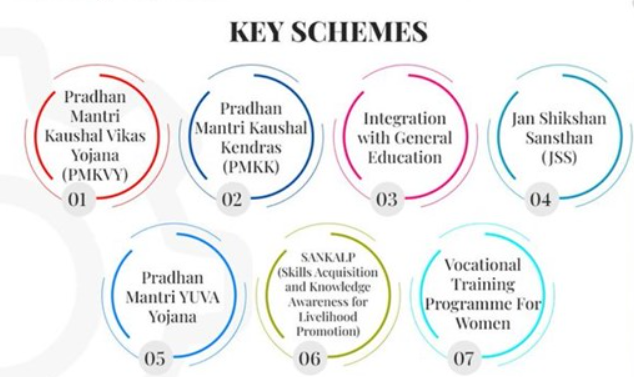
- Between 2015 and 2025, India’s flagship skilling programme, Pradhan Mantri Kaushal Vikas Yojana (PMKVY), has trained and certified around 1.40 crore candidates, reflecting serious public investment and policy intent.
- PLFS data show that wage gains from vocational training are modest and inconsistent, offering limited recognition for certified skills and little visible improvement in quality of life.
- In contrast, vocational participation exceeds 70% in Germany and Japan and crosses 90% in South Korea (OECD).
Reasons for not Preferring Skilling
- Legitimacy of Degrees: Degrees indicate long-term mobility, social recognition, and economic credibility.
- Skilling does not lead to recognised qualifications and progressive employment thus, participation becomes unaspirational.
- Limited reliance on public certifications: Most employers do not treat government skilling certifications as credible hiring benchmarks, preferring internal training systems, referrals, or private platforms.
- Uneven impact of apprenticeships: While the National Apprenticeship Promotion Scheme (NAPS) has expanded industry participation, benefits are concentrated among large firms, with MSMEs remaining marginal.
- Demand–supply mismatch persists: Skilling remains something industry consumes rather than co-designs, resulting in training that often lags behind evolving labour-market needs.
Key Challenges in the Ecosystem
- Sector skill councils: SSCs are industry-led bodies under the National Skill Development Corporation (NSDC), mandated to define skill standards, ensure industry relevance, and enhance employability; however, this mandate has not been fully realised.
- Certifications from AWS, Google Cloud, or Microsoft work because the certifier’s credibility is at stake.
- Until SSCs are held accountable for employability, certification will remain symbolic rather than economic.
- Responsibility is Fragmented: Unlike Higher Education or Technical Institutions where reputational risk enforces accountability, the skilling system diffuses responsibility without consequence which has eroded trust.
- Weak industry role in curriculum design: Industry faces neither strong incentives nor binding obligations to participate in curriculum development, certification standards, or assessment frameworks.
- Without deeper industry ownership, skilling programmes struggle to remain relevant, credible, and scalable.
Way Ahead
- Workplace-embedded skilling as a fast lever: Expanding NAPS and deepening industry integration can rapidly improve job readiness by shifting skill acquisition into real work environments.
- Integrating skills with formal education: Embedding skills within degree and diploma pathways enhances credibility, aspiration, and labour-market alignment.
- Industry as co-owner, not end-user: Treating industry as a co-designer and co-owner of skilling programmes ensures curriculum relevance and hiring alignment.
- Outcome accountability for SSCs: Making Sector Skill Councils answerable for placement and employability outcomes can restore certification credibility.
Conclusion
- India’s Gross Enrolment Ratio (GER) stands at 28%, but the National Education Policy 2020 aims for it to touch the 50% mark by 2035.
- For skilling to scale credibly and inclusively, it must be integrated with formal education systems, not run parallel to them.
- Industry-linked, education-embedded skill is essential for converting India’s demographic strength into sustained economic growth and productivity gains.
Source: TH
Sources and further reading
- THthehindu.com