
Brief Context
Context Eight healthy babies were born in Britain with the help of an experimental technique called Mitochondrial Replacement Therapy (MRT). About The mothers were all at high risk for passing on life-threatening diseases to their babies due to mutations in their mitochondria. The four boys and four girls were born to seven women and have no signs of the mitochondrial diseases they were at risk of inheriting.
Source Content
Syllabus: GS3/Science and Technology
Context
- Eight healthy babies were born in Britain with the help of an experimental technique called Mitochondrial Replacement Therapy (MRT).
About
- The mothers were all at high risk for passing on life-threatening diseases to their babies due to mutations in their mitochondria.
- The four boys and four girls were born to seven women and have no signs of the mitochondrial diseases they were at risk of inheriting.
- The UK became the first country to approve the use of mitochondrial donation in 2015.
- The procedure is not yet permitted in India.
Mitochondrial Genes
- Mitochondria: The human genes are curled up in the nucleus of nearly every cell in the body.
- The fluid surrounding the nucleus contains hundreds to thousands of mitochondria that carry their own set of 37 genes.
- The mitochondria are membrane-bound organelles often referred to as the “powerhouses of the cell” because they play a crucial role in producing energy.
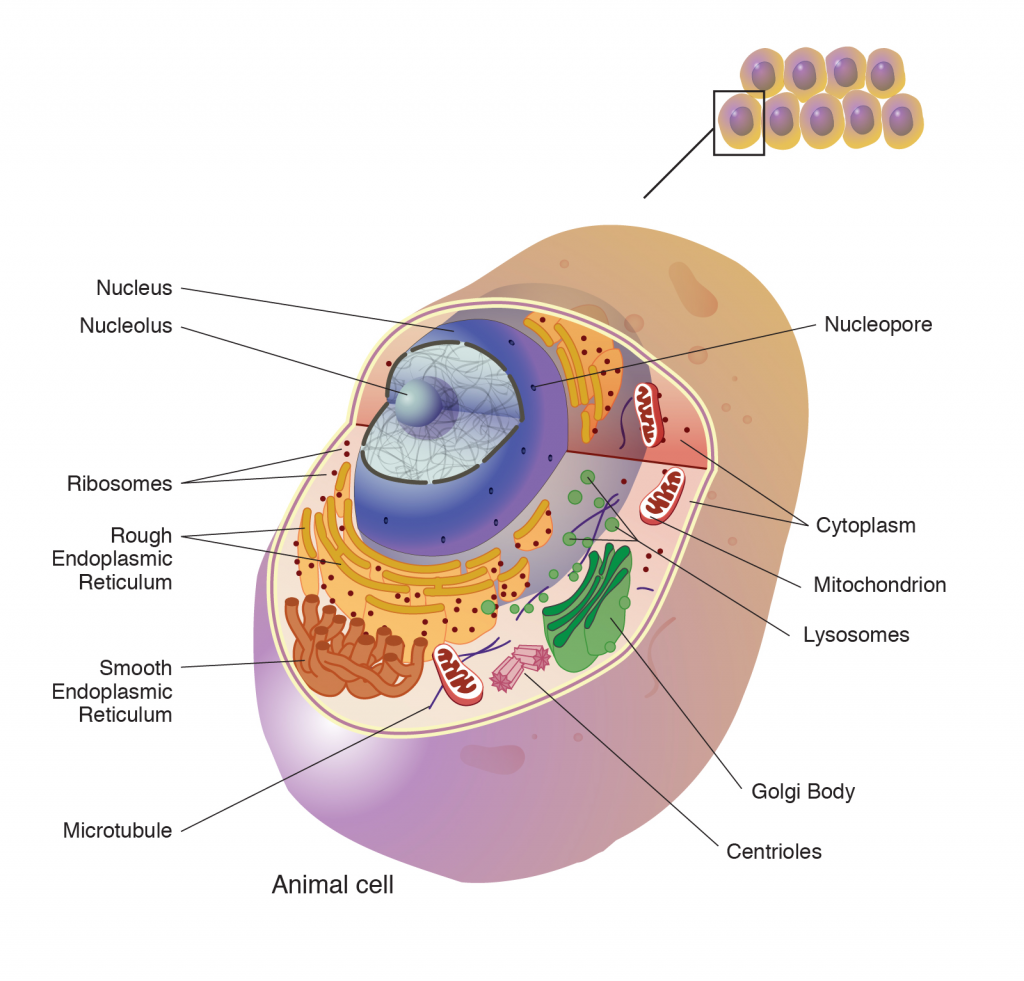
- People inherit all their mitochondria from their biological mother, mutations can affect all the children a woman has.
- Mutations in these genes can impair or completely disable mitochondria with catastrophic effects.
- The first symptoms of mitochondrial disease tend to appear in early childhood as energy-hungry organs such as the brain, heart and muscles start to fail.
- Many affected children have developmental delays, require wheelchairs and die young. About one in 5,000 newborns are affected.
Mitochondrial Donation Treatment (MDT)
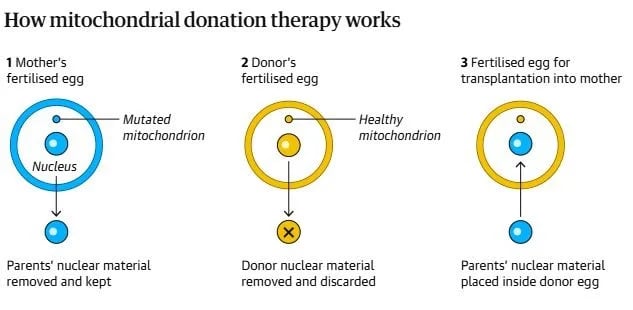
- A three-parent baby is produced from the genetic material of one man and two women through mitochondrial replacement therapy (MRT) and three-person in vitro fertilization (IVF).
- Aim: To prevent children from inheriting mutated mitochondria.
- Procedure: It involves fertilising the mother’s egg with the father’s sperm and then transferring the genetic material from the nucleus into a fertilised healthy donor egg that has had its own nucleus removed.
- This creates a fertilised egg with a full set of chromosomes from the parents, but healthy mitochondria from the donor.
- The egg is then implanted into the womb to establish a pregnancy.
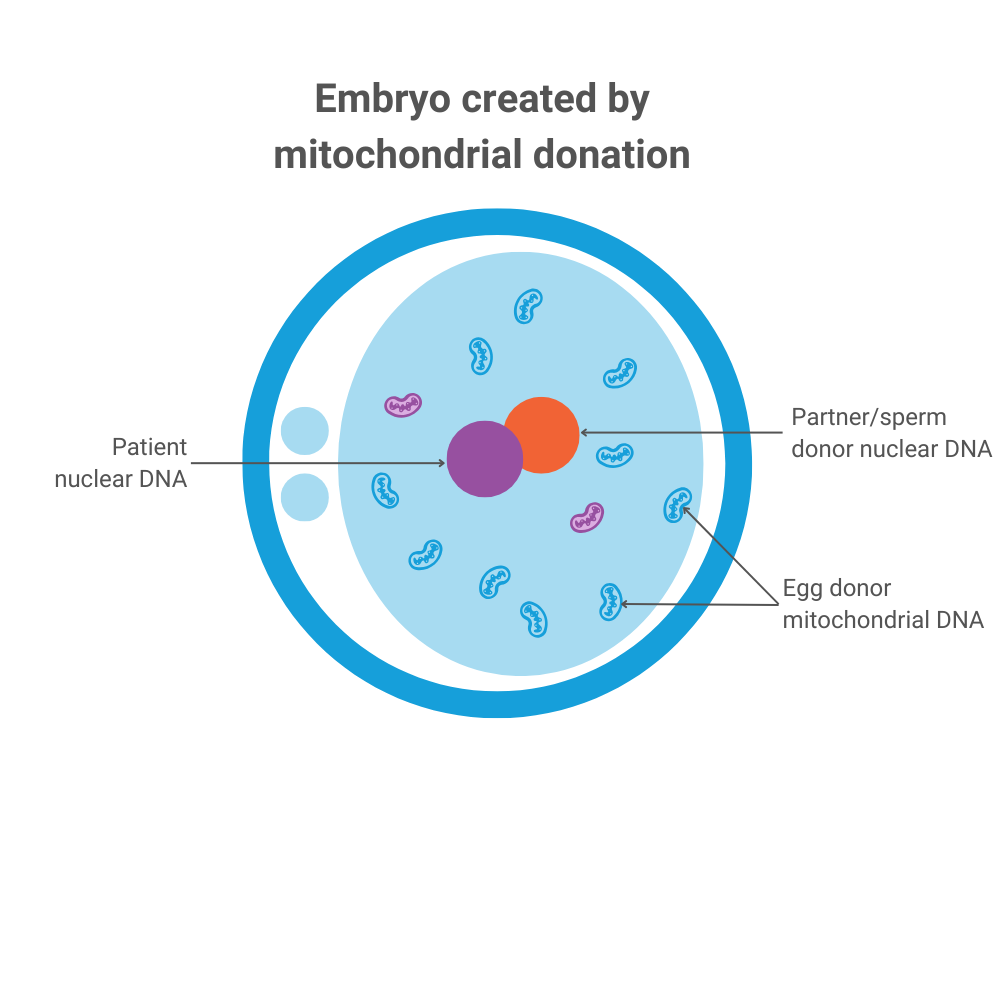
- These babies carry nuclear DNA from their biological mother and father, and a small portion of mitochondrial DNA from a female donor.
Conclusion
- Scientists around the world are closely watching the UK’s results.
- Many believe that with careful regulation, MDT could become a routine option for families at risk, helping to stop certain genetic diseases before they begin.
Source: LM