Introduction to History of Assam
The history of Assam and Ahom rule is a captivating saga of resilience, cultural synthesis, and eventual decline, spanning nearly six centuries of dominance in Northeast India. At the heart of this narrative lies the Moamoria Rebellion (1769–1805), a seismic upheaval that not only challenged the mighty Ahom kingdom but also set the stage for its ultimate downfall. Emerging in the lush Brahmaputra Valley, the Ahom dynasty, founded in 1228 by the Tai prince Sukaphaa, had weathered Mughal invasions, forged a unique multi-ethnic society, and established a sophisticated administrative system. Yet, by the late 18th century, cracks began to appear—social unrest, economic strain, and religious discord converged to spark one of the most significant revolts in Assam’s history. The Moamoria Rebellion wasn’t merely a fleeting uprising; it was a profound socio-religious and economic movement that eroded the foundations of Ahom supremacy, inviting foreign interventions that reshaped Assam’s destiny.

Why does this rebellion matter today? It marks a critical turning point in the “History of Assam and Ahom rule,” weakening a once-invincible kingdom and opening the door to Burmese invasions and British colonization. Far from a simple clash of arms, the rebellion reflected deep-seated grievances among marginalized communities, fueled by the egalitarian ideals of neo-Vaishnavism and the oppressive policies of Ahom rulers.
- APSC Notification 2025 OUT | APSC CCE 2025 Exam Date, Vacancy, Exam Pattern, Syllabus & Eligibility
- APSC Exam 2025: A Complete Guide for Aspirants
- APSC CCE Final Result 2023: Assam Public Service Commission Declares Results for Combined Competitive Examination
- APSC Result 2025: Date, Download PDF, and Merit List
- APSC Application Form 2025: Expected Release Date , How to Apply
- APSC Cut Off 2025: Expected Cut off, Everything You Need to Know
- APSC Exam 2025: Key Dates, Eligibility, Admit Card, Syllabus, and Exam Pattern
- APSC Syllabus 2025: Subject-Wise Topics for APSC Prelims, Mains, and Interview
Historical Context of the Ahom Kingdom
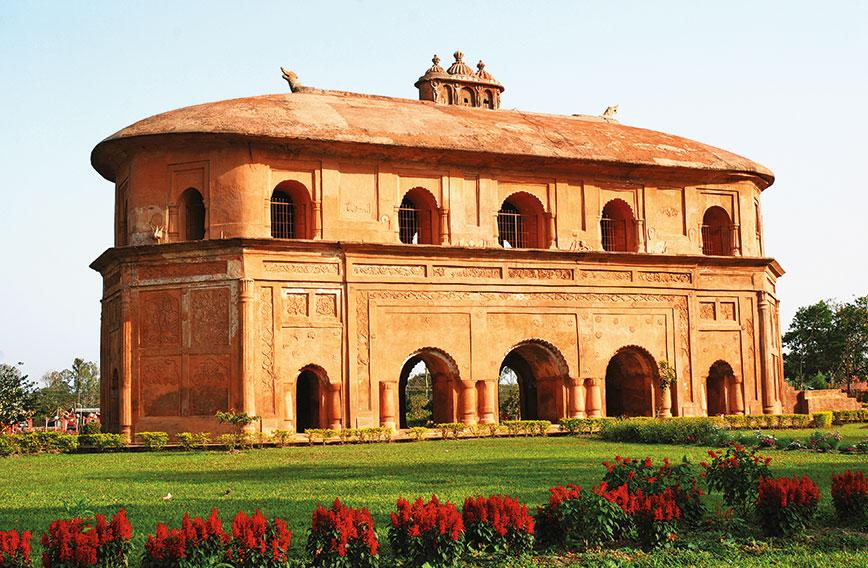
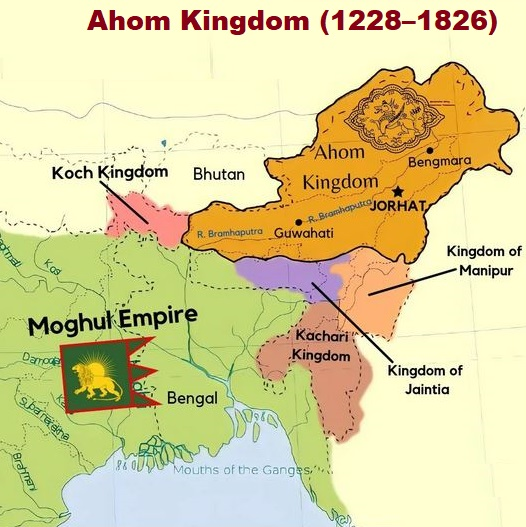
To grasp the significance of the Moamoria Rebellion, we must first journey into the remarkable “History of Assam and Ahom rule,” a tale of conquest, adaptation, and cultural fusion that defined Northeast India for nearly six centuries. The Ahom kingdom’s origins trace back to 1228, when Sukaphaa, a Tai prince from Mong Mao (in present-day Yunnan, China), crossed the Patkai hills into the Brahmaputra Valley. Unlike typical conquerors, Sukaphaa didn’t impose his will through brute force; he sought alliances with local tribes like the Morans and Barahis, laying the groundwork for a kingdom that blended Tai traditions with indigenous Assamese culture. Over time, this small principality grew into a formidable power, its rulers—known as Swargadeos (heavenly kings)—expanding their domain across Assam’s fertile plains and rugged hills.
The Golden Age of the Ahom Kingdom
The Ahom kingdom reached its zenith in the 16th and 17th centuries, a golden age that solidified its place in the “History of Assam and Ahom rule.” Under Swargadeo Suhungmung (1497–1539), the kingdom embraced a multi-ethnic identity, incorporating communities like the Chutias and Kacharis through diplomacy and military campaigns. This era also saw the development of the Paik system, a unique labor-based structure where every able-bodied man, or paik, served the state as a soldier, farmer, or laborer in exchange for land. This system fueled the kingdom’s military might and economic stability, enabling it to repel Mughal invasions, most famously at the Battle of Saraighat in 1671 under Lachit Borphukan. This iconic victory against Mir Jumla’s forces showcased Ahom resilience and naval prowess, a triumph still celebrated in Assam’s collective memory.
Cultural and Religious Transformation
Yet, the Ahom kingdom wasn’t just a military powerhouse; it was a crucible of cultural and religious transformation. In the 16th century, the neo-Vaishnavite movement, spearheaded by the saint-reformer Srimanta Sankardeva, swept through Assam, challenging orthodox Hinduism and the Ahom rulers’ patronage of Shaktism. Sankardeva’s egalitarian teachings, spread through sattras (monastic centers), emphasized devotion over ritualistic hierarchy, attracting lower castes and marginalized groups disillusioned by the Paik system’s demands. These sattras became sanctuaries of learning and spirituality, subtly undermining the state’s control over its subjects. By offering refuge from forced labor, they planted seeds of dissent that would later sprout into rebellion.
Decline of the Ahom Kingdom
By the 18th century, however, the Ahom kingdom’s golden era had faded. Economic stagnation crept in as trade routes shifted and agricultural yields faltered under the strain of an overextended Paik system. Internal strife intensified as royal succession disputes and noble factionalism weakened centralized authority. Meanwhile, the growing influence of sattras, particularly the Mayamara Sattra among the Moran tribe, clashed with the monarchy’s religious policies, setting a volatile stage. Kings like Siba Singha (1714–1744) and his consort Phuleswari escalated tensions by imposing Shakta rituals on Vaishnava followers, alienating large swathes of the population. This simmering discontent, rooted in social, economic, and religious fissures, made the kingdom ripe for upheaval. The Moamoria Rebellion would soon erupt, forever altering the “History of Assam and Ahom rule”—a story of a kingdom undone not by external foes, but by its own internal contradictions.
Causes of the Moamoria Rebellion
The Moamoria Rebellion ranks among the most pivotal chapters in the “History of Assam and Ahom rule,” a cataclysmic event born not from a fleeting dispute but from a tangled web of grievances that had long plagued the Ahom kingdom. By the late 18th century, this once-mighty dynasty faced a reckoning, as socio-religious tensions, economic hardship, and political tyranny converged to ignite a revolt that would echo through Assam’s history. To unravel why this uprising shattered a 600-year-old regime, we must explore its intricate causes—each a fracture in the edifice of Ahom rule.
Socio-Religious Tensions: A Clash of Beliefs
Central to the rebellion was a profound religious conflict, pitting the neo-Vaishnavite ideals of the Moamorias against the Shaktism favored by Ahom rulers. The Moamorias, devotees of the Mayamara Sattra—established by Aniruddhadeva, a follower of Srimanta Sankardeva—championed a faith that rejected caste distinctions and elaborate ceremonies. This egalitarian creed resonated with marginalized groups like the Morans, Mataks, and Kacharis, who found solace in its simplicity. In contrast, the Ahom monarchy upheld Shakta rituals, involving animal sacrifices and priestly authority, which clashed with Vaishnava principles. Tensions boiled over during the reign of Siba Singha (1714–1744), when his consort, Phuleswari, sought to impose Shakta dominance. Her decree to smear sattradhikars (Vaishnava monastic leaders) with animal blood was an outrage that galvanized the Moamoria community, transforming their sattras into centers of defiance. This religious persecution fueled a broader movement that destabilized the kingdom.
Economic Distress: The Crumbling Paik System
The rebellion’s roots also lay in economic discontent, driven by the faltering Paik system—the backbone of Ahom governance. This labor framework compelled every able-bodied man, known as a paik, to serve the state as a soldier, farmer, or worker in return for land rights. While it once sustained the kingdom’s prosperity, by the 18th century, it had become a burden. Economic decline, marked by shrinking trade and failing harvests, strained the system, while its unrelenting demands alienated the peasantry. Tribes like the Morans bore the brunt, their labor exploited without relief. The rise of sattras offered an alternative: by joining these communities, paiks could escape state duties, sapping the Ahom administration of its workforce. As royal coffers emptied and officials grew ruthless, economic frustration morphed into a revolutionary force. Explore the Paik system’s role in-depth. https://learnpro.in/paik-system-in-assam/
Political Tyranny: The Weight of Oppression
The Ahom elite’s arrogance provided the final push toward rebellion. Decades of political misrule had eroded trust in the monarchy. Kings like Gadadhar Singha (1681–1696) persecuted Vaishnavas,
persecuted Vaishnavas, particularly the influential Mayamara Mahantas, leading to deep-seated resentment among their numerous followers. This religious intolerance, coupled with the economic hardships and the oppressive Paik system, ignited the devastating Moamoria Rebellion. Beginning in the late 18th century, this series of insurrections severely weakened the Ahom state, draining its resources and destabilizing its political structure. The rebels, primarily from the Morans and other tribal communities, challenged the Ahom authority repeatedly, leading to prolonged civil strife. The Ahom monarchy, once a symbol of unity and strength, became increasingly fragile, marked by weak successors, court intrigues, and a constant struggle for power among the nobility. The inability of the Ahom kings to effectively quell these internal uprisings and address the grievances of the populace paved the way for external intervention.
External Aggression and the British Intervention
The internal turmoil and weakened state of the Ahom kingdom attracted the attention of external powers. The Burmese invasions, occurring in three major waves between 1817 and 1826, proved to be the final nail in the coffin for Ahom rule. The Burmese forces, initially invited by warring Ahom factions, wreaked havoc across Assam, leading to widespread destruction, depopulation, and economic ruin. Unable to repel the invaders, the Ahom rulers desperately sought assistance from the British East India Company. This intervention, however, came at a heavy price. The British, already expanding their influence in Northeast India, saw an opportunity to secure their borders and expand their territories.
The Treaty of Yandabo and the End of Ahom Rule
The British intervention culminated in the First Anglo-Burmese War (1824-1826). The war concluded with the signing of the Treaty of Yandabo on February 24, 1826. This landmark treaty officially ended Burmese aggression in Assam and, more significantly, marked the end of the glorious 600-year-long Ahom rule. Under the terms of the treaty, the Burmese renounced all claims on Assam, and the British East India Company took direct control of the region. Thus, the Ahom kingdom, once a formidable power, succumbed to a combination of internal decay, economic strain, political tyranny, and external aggression, paving the way for British colonial administration in Assam.
Frequently Asked Questions (FAQs)
- What was the primary cause of the Moamoria Rebellion?
- The Moamoria Rebellion was primarily caused by a combination of factors including the oppressive Paik system, economic exploitation of the peasantry (especially the Morans), and the religious persecution of the Mayamara Vaishnavas by the Ahom kings.
- Who was the last Ahom King?
- Purandar Singha was the last Ahom King, though his reign was largely nominal and under British influence before the complete annexation of Assam.
- What was the significance of the Treaty of Yandabo?
- The Treaty of Yandabo (1826) was significant as it formally ended the First Anglo-Burmese War, marked the end of the 600-year-long Ahom rule in Assam, and initiated British colonial administration in the region.
- How did the Paik system contribute to the decline of the Ahom kingdom?
- While initially a strength, the Paik system became a burden due to its rigid demands, leading to economic hardship and alienation of the peasantry. The escape of paiks to sattras further depleted the state’s workforce and revenue, contributing to internal instability and rebellion.
Practice Questions for APSC CCE Exam
Multiple Choice Questions (MCQs)
The Treaty of Yandabo, which marked the end of Ahom rule, was signed in which year?
- 1824
- 1826
- 1828
- 1830
Correct Answer: b) 1826
The Moamoria Rebellion was primarily led by the followers of which religious sect in Assam?
- Saktism
- Vaishnavism (Mayamara sect)
- Buddhism
- Islam
Correct Answer: b) Vaishnavism (Mayamara sect)
Mains Question
Analyze the multi-faceted factors, both internal and external, that led to the decline and eventual fall of the Ahom kingdom in Assam. (250 words)