
Brief Context
Context Scientists have confirmed the existence of a massive offshore freshwater aquifer beneath the Atlantic Ocean, stretching from New Jersey to Maine, marking the first systematic global expedition to drill for undersea groundwater. What are Offshore Aquifers? Offshore aquifers are underground bodies of porous rock or sediment saturated with freshwater, located beneath the sea floor.
Source Content
Syllabus: GS1/ Geography, GS3/ Environment
Context
- Scientists have confirmed the existence of a massive offshore freshwater aquifer beneath the Atlantic Ocean, stretching from New Jersey to Maine, marking the first systematic global expedition to drill for undersea groundwater.
What are Offshore Aquifers?
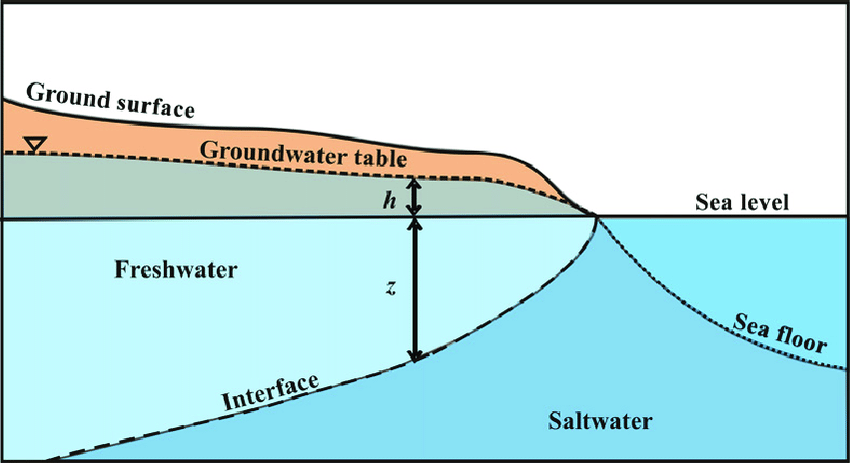
- Offshore aquifers are underground bodies of porous rock or sediment saturated with freshwater, located beneath the sea floor.
- They resemble land-based aquifers but remain submerged under shallow coastal waters, extending up to 90 km from the shoreline.
- A 2021 study in Environmental Research Letters estimated that nearly 1 million cubic kilometres of freshwater lie beneath the oceans, around 10% of Earth’s terrestrial groundwater reserves.
- Location: Confirmed and studied locations include the coasts of;
- United States (Northeast Atlantic, California)
- Australia (Perth Basin, Sydney Basin)
- China (Yellow Sea, recently discovered large reserves)
- South Africa (Cape Peninsula)
- Europe (North Sea, Mediterranean).
How Do They Get Freshwater?
- Ice Age Hypothesis: During glacial periods, when sea levels were lower, rainfall infiltrated exposed land, gradually filling aquifers that are now under the ocean.
- Onshore Connection Hypothesis: Some offshore aquifers remain linked to land aquifers and receive freshwater recharge through groundwater flow.
- Cap Rock Protection: A clay-rich compacted layer seals the aquifers, preventing freshwater from mixing with surrounding seawater.
Why are Offshore Aquifers Significant?
- Addressing Global Water Crisis: According to the UN (2023), global freshwater demand will exceed supply by 40% by 2030. Offshore aquifers could act as strategic reserves.
- Climate Resilience: Rising global warming, changing rainfall patterns, and over-extraction of land aquifers have worsened water scarcity. Offshore aquifers offer an alternative to stressed terrestrial sources.
- Strategic Importance: For countries facing droughts and urban demand, offshore aquifers can reduce dependence on costly desalination or water imports.
Challenges in Extraction
- High Cost: Offshore drilling is technologically complex and expensive. The US northeast exploration cost $25 million.
- Engineering Difficulties: Designing wells under the seabed, ensuring transport of water onshore, and preventing seawater intrusion are major hurdles.
- Environmental Risks: Extraction could disturb marine ecosystems, alter pressure balances, or cause saltwater contamination.
- If the water is ancient (from Ice Age recharge), it is a non-renewable resource and must be used cautiously.
- Governance Issues: Questions of ownership, coastal community rights, and international disputes over undersea water remain unresolved.
Way Ahead
- Framing International Law: The global community can develop a
- or other instruments to govern the equitable and sustainable use of offshore freshwater resources, preventing future conflicts.
- Integrated Water Management: Offshore aquifers can be viewed as a strategic part of a diversified water portfolio that includes conservation, wastewater recycling, and sustainable use of surface water.
Source: IE