
Brief Context
Context The Brahmaputra, Teesta, and Dharla rivers have become unpredictable, eroding land faster than ever before. About Riverbank Erosion Riverbank erosion is the wearing away of the banks of a river due to the continuous action of flowing water. It is a natural geomorphological process but can be accelerated by human activities or environmental changes.
Source Content
Syllabus: GS1/Geography
Context
- The Brahmaputra, Teesta, and Dharla rivers have become unpredictable, eroding land faster than ever before.
About Riverbank Erosion
- Riverbank erosion is the wearing away of the banks of a river due to the continuous action of flowing water.
- It is a natural geomorphological process but can be accelerated by human activities or environmental changes.
- When water flows along a river channel, it exerts shear stress on the riverbanks.
- Over time, this force removes soil, sand, and rock particles from the bank, leading to undercutting, collapse, and retreat of the riverbank.
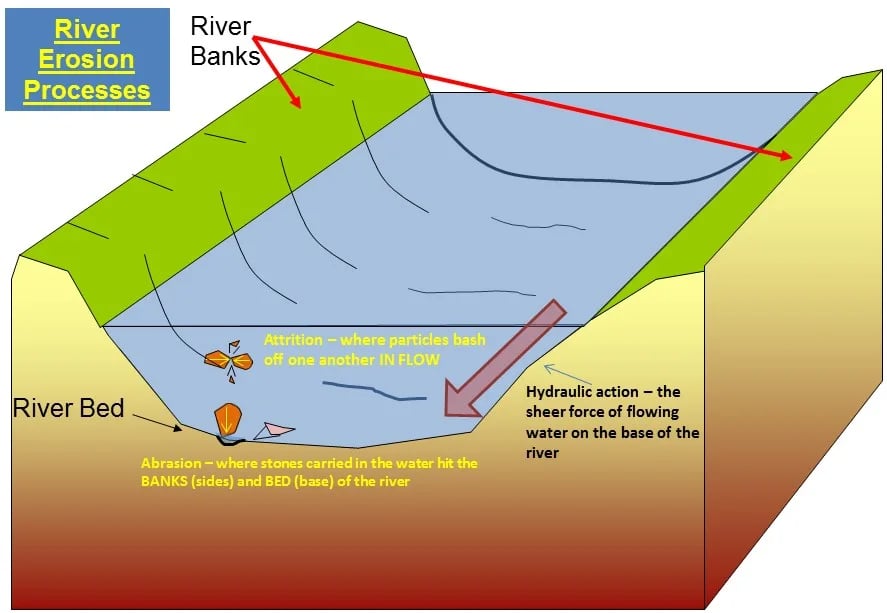
Causes of Riverbank Erosion
- Natural Causes
- Strong river currents: Fast-flowing water erodes the outer banks of bends (meanders).
- Floods: High water volume and velocity during floods intensify erosion.
- Soil composition: Loose or sandy soils erode more easily.
- Lack of vegetation: Roots help bind the soil; their absence makes banks fragile.
- River meandering: Continuous shifting of river channels causes lateral erosion.
- Human-Induced Causes:
- Deforestation near riverbanks.
- Sand mining and gravel extraction.
- Construction of dams and embankments altering natural flow.
- Overgrazing or cultivation close to the river edge.
Impacts
- Loss of agricultural land and livelihoods.
- Displacement of people, which is also a major problem in states like Assam and West Bengal.
- Damage to infrastructure such as roads, bridges, and embankments.
- Sedimentation downstream, affecting navigation and aquatic life.
Control and Mitigation Measures
- Bioengineering methods: planting grasses, shrubs, and trees to stabilize banks.
- Construction of revetments, spurs, and gabion walls.
- River training and dredging to manage flow.
- Community-based riverbank management and land-use planning.
Source: TH