
Brief Context
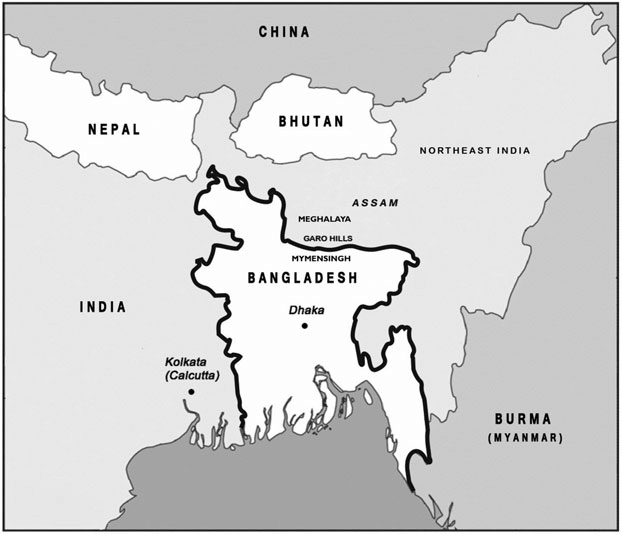
Context The Border Security Force (BSF) is exploring the use of natural deterrents like snakes and crocodiles in riverine stretches of the India–Bangladesh Border, where fencing is not feasible. India–Bangladesh Border: Key Facts The India–Bangladesh border, stretching approximately 4,096.7 km, is India’s longest international boundary. Out of this, around 3,232 km has been fenced, while about 864 km remains unfenced, including nearly 174 km of non-feasible gaps.
Source Content
Syllabus: GS3/Internal Security
Context
- The Border Security Force (BSF) is exploring the use of natural deterrents like snakes and crocodiles in riverine stretches of the India–Bangladesh Border, where fencing is not feasible.
India–Bangladesh Border: Key Facts
- The India–Bangladesh border, stretching approximately 4,096.7 km, is India’s longest international boundary.
- Out of this, around 3,232 km has been fenced, while about 864 km remains unfenced, including nearly 174 km of non-feasible gaps.
- These gaps exist due to rivers (such as the Ichhamati, Raimangal, and Haribhanga), frequent flooding, and difficult terrain, especially in the Sundarbans region.
- The border passes through West Bengal, Assam, Meghalaya, Tripura, and Mizoram.
Major Issues
- Porous Border & Illegal Migration: Long-standing concern of illegal migration from Bangladesh.
- It is driven by economic disparities, and environmental displacement (floods, erosion).
- Smuggling & Transnational Crime: Common illegal activities i.e. cattle smuggling, narcotics trafficking, and fake currency.
- Organized networks exploit difficult terrain and local linkages.
- Riverine & Difficult Terrain: Large stretches are flood-prone, without fencing, and subject to changing river courses.
- Physical barriers are difficult in low-lying and riverine areas, delaying fencing projects.
- Border Fencing Challenges: Land acquisition issues, and local protests (fencing cuts through villages/agricultural land).
- Fencing norms (distance from zero line) complicate implementation.
- Humanitarian & Social Concerns: Border residents face restricted movement, livelihood disruptions, and allegations of excessive force.
- India–Bangladesh Coordination Issues: Occasional tensions like border killings, and disputes over fencing close to the zero line.
Border Management Measures Adopted
- Deployment of BSF: BSF is the primary border guarding force, for round-the-clock surveillance and patrolling.
- Technological Interventions: BOLD-QIT (Comprehensive Integrated Border Management System) deployed in Assam riverine stretches. It uses sensors, thermal imagers, and radars.
- Smart Fencing (BOLD-QIT): Smart fencing for real-time monitoring, with integrated command and control systems.
- Border Outposts (BOPs) Strengthening: Increased density of BOPs, and identification of ‘dark areas’ (no mobile connectivity) for improvement.
- India–Bangladesh Cooperation: Coordinated Border Management Plan (CBMP); joint patrols and flag meetings; and improved intelligence sharing.
- Land Boundary Agreement (LBA), 2015: Settlement of enclave disputes (exchange of territories); demarcation of previously undefined border segments; improved bilateral relations and reduced conflict zones.
- Border Haats (Local Trade Markets): To promote local economic cooperation, legalize small-scale cross-border trade, reduce smuggling and informal trade, and improve livelihoods in border communities.
Challenges & Concerns opting natural deterrents
- Ecological & Ethical Issues: Introducing or manipulating wildlife populations for security purposes could disturb natural ecosystems and violate wildlife protection norms.
- Proportionality Concerns: Snakes and crocodiles cannot distinguish between infiltrators and local fishermen or civilians, raising serious humanitarian questions.
- International Law Angle: Use of lethal natural hazards as deliberate border barriers may conflict with international humanitarian norms.
About Border Security Force (BSF)
- It is India’s primary border guarding force, functioning under the Ministry of Home Affairs (MHA), was established on 1 December 1965.
- It is one of the Central Armed Police Forces (CAPFs) tasked with ensuring the security of India’s borders, especially with Pakistan and Bangladesh.
- Legal Basis: Border Security Force Act, 1968
- Objectives:
- Ensure security of India’s borders
- Prevent trans-border crimes
- Check illegal migration and infiltration
- Act as the first line of defence during peacetime