
Brief Context
Context The Union government has undertaken various measures, including a policy push, to promote deep tech in India. Deep Technology Deep Technology refers to innovations founded on advanced scientific and technological breakthroughs. Currently India has over 3600 Deep Tech startups, with over 480 being established in 2023 itself.
Source Content
Syllabus: GS3/Science and Technology
Context
- The Union government has undertaken various measures, including a policy push, to promote deep tech in India.
Deep Technology
- Deep Technology refers to innovations founded on advanced scientific and technological breakthroughs.
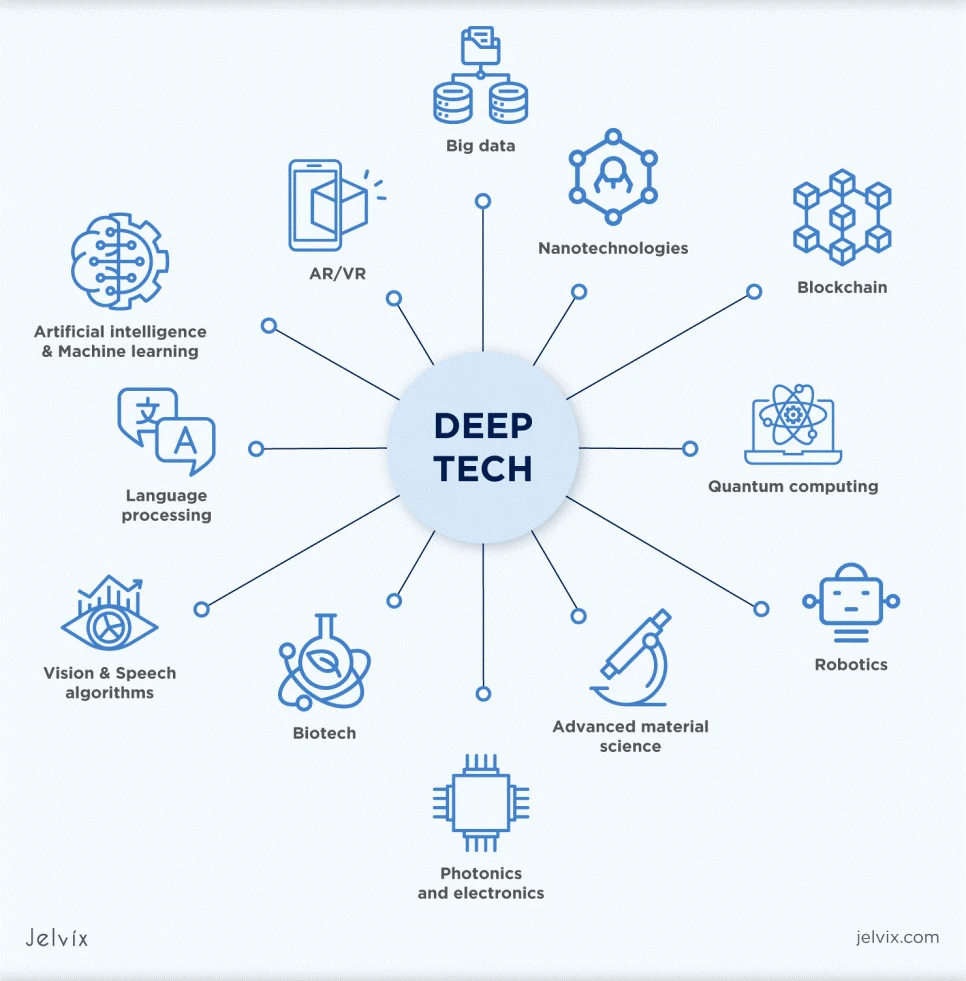
- Currently India has over 3600 Deep Tech startups, with over 480 being established in 2023 itself.
Significance of India’s Deep-Tech Ambitions
- Global Leadership: It positions India as a trusted R&D hub in the global landscape, leveraging its massive STEM talent pool to lead in frontier technologies.
- Technological Sovereignty: Reduces critical reliance on foreign imports for national security, defense, and space, ensuring India isn’t vulnerable to global supply chain disruptions.
- Solving Local Challenges: Enables India-first solutions for massive social hurdles, such as AI for rural healthcare, precision agriculture for food security, and green hydrogen for energy independence.
- Economic Value: A robust deep-tech ecosystem enables India to move up the global value chain, shifting from low-cost services and assembly-based manufacturing to high-value research, design and intellectual property creation.
Challenges
- Deep tech often requires large upfront investment and long development timelines, making it less attractive to traditional venture capital.
- Limited access to specialised labs, supercomputing and testing facilities slows innovation.
- A shortage of specialised research talent and relatively low industry‑linked R&D spending compared with global peers hinder progress.
- Deep tech solutions often face regulatory and adoption barriers that delay commercialisation.
Government Initiatives
- The Draft National Deep Tech Startup Policy (NDTSP) is strategically formulated to stimulate innovation, spur economic growth, and promote societal development through the effective utilization of deep tech research-driven innovations.
- This policy aims to significantly strengthen India’s capabilities and enhance global competitiveness.
- IndiaAI Mission (2024): It has a budget of ₹10,300 crore over five years.
- A key goal is the creation of a high-end common computing facility with 18,693 GPUs.
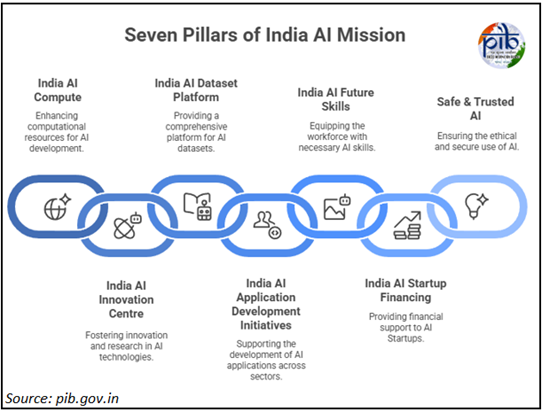
- India’s AI Models & Language Technologies: The government is facilitating the development of India’s own foundational models, including Large Language Models (LLMs) and problem-specific AI solutions tailored to Indian needs.
- Research, Development and Innovation (RDI) Scheme: To finance innovation at scale, the Government also announced a new Research, Development and Innovation (RDI) Fund with a total outlay of ₹1 lakh crore.
- The Government has notified the Indian Space Policy, 2023, which clearly delineates the roles of ISRO, IN-SPACe and industry, thereby enabling private sector participation across the entire space value chain.
- Foreign Direct Investment (FDI) norms in the space sector have been liberalised, permitting up to 100% FDI in satellite manufacturing and components, and enhanced limits in launch vehicles and satellite operations, to attract global capital and technology.
- Establishment of the Anusandhan National Research Foundation (ANRF) under the ANRF Act, 2023.
- The ANRF is intended to provide strategic direction, competitive funding opportunities and collaboration pathways across industry, academia and government
- The National Quantum Mission launched in 2023 for the period 2023‑24 to 2030‑31 to accelerate research, development, and deployment of quantum technologies, including quantum computing, communication, and sensing.
- The Bio-E3 Policy is being implemented to promote biotechnology entrepreneurship, biomanufacturing, and bio-based innovation, creating an enabling environment for startups to scale their solutions in emerging biotechnologies.
- AI Centers of Excellence: Establishing dedicated AI hubs and innovation centers across the country to support AI startups and research.
- Semicon India Program: Launched in 2021, it is structured to promote the domestic semiconductor industry through incentives and strategic partnerships.
- At Global Investors Summit 2025, it was announced that India’s first indigenous semiconductor chip will be ready for production by 2025.
Source: TH